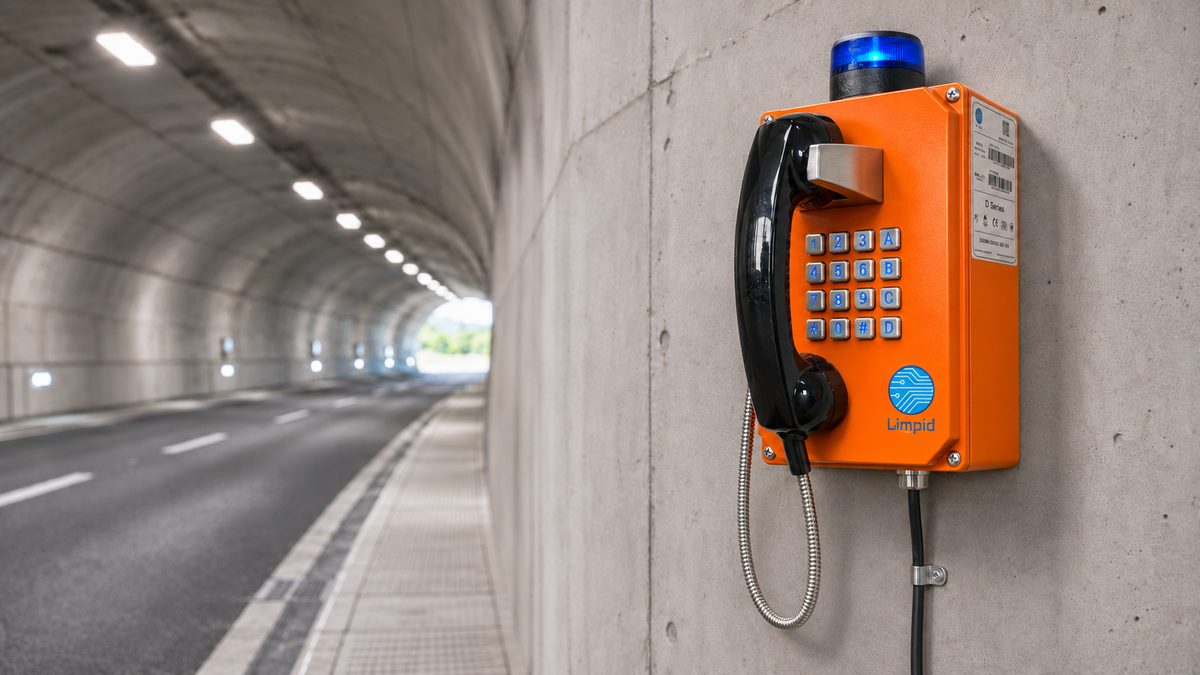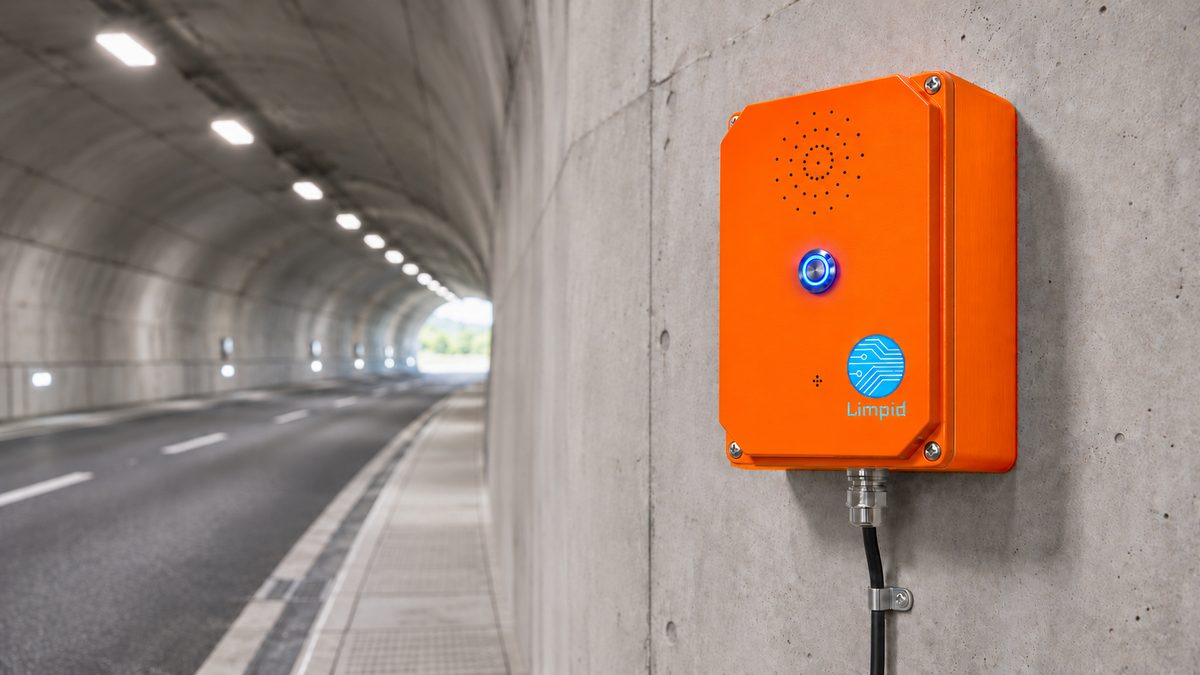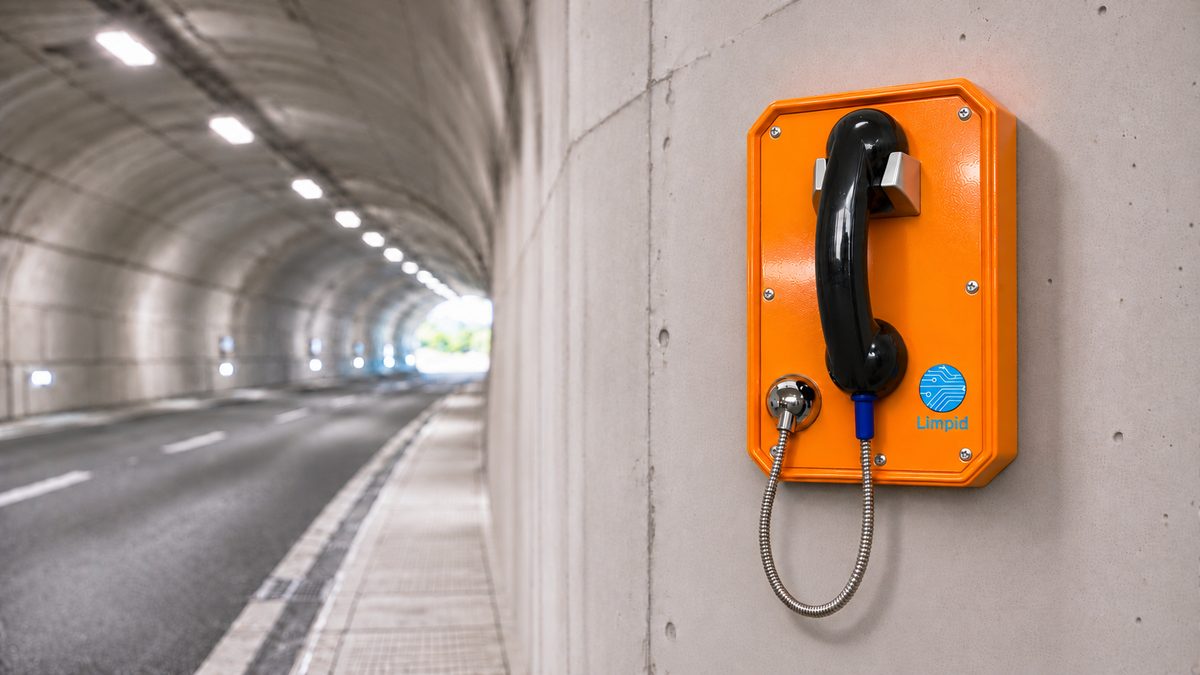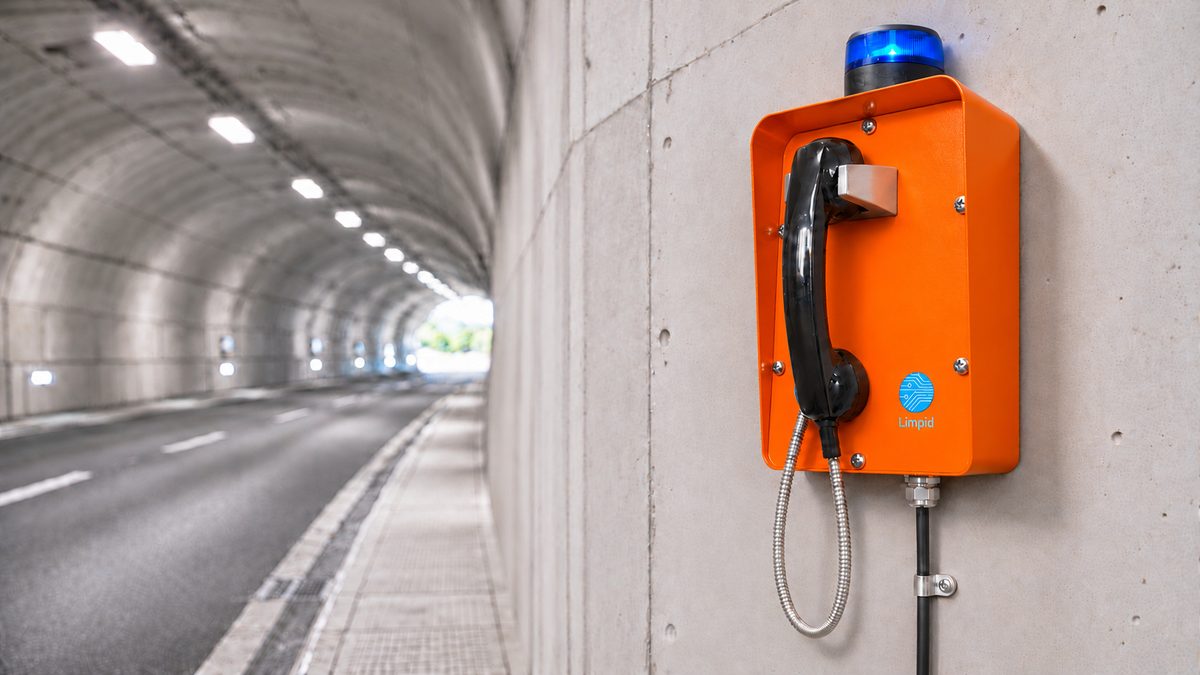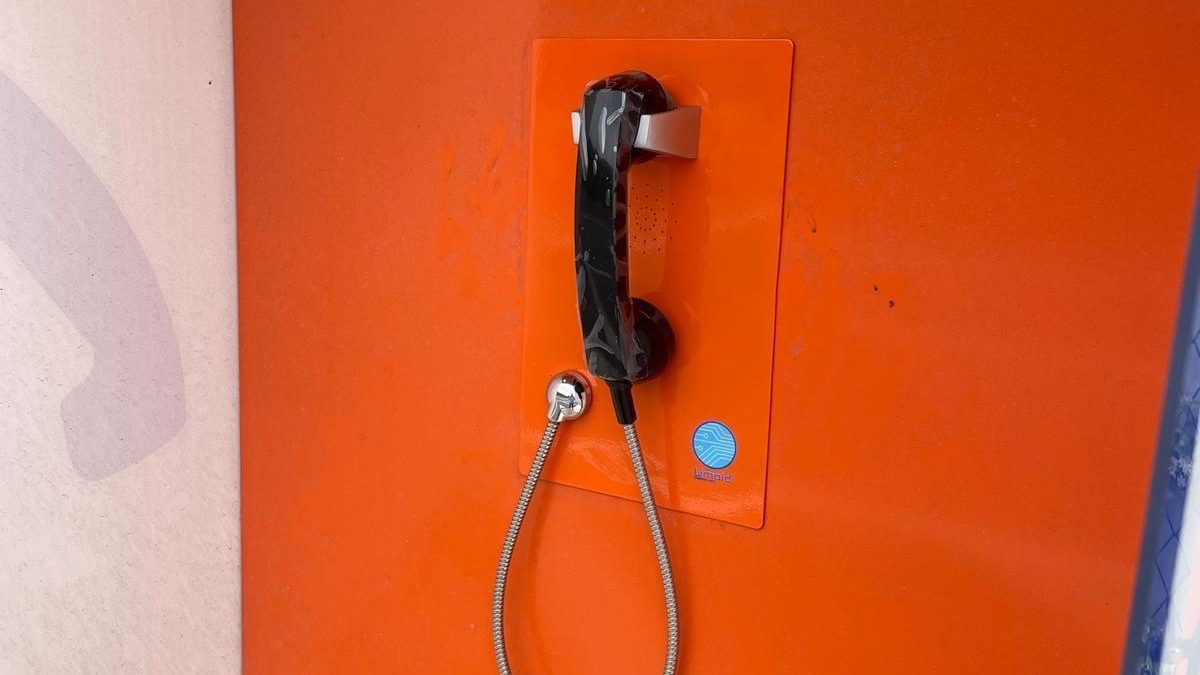
A SIP emergency telephone connects to an Ethernet (IP) network and registers with an IP PBX using the SIP protocol. When the handset is lifted or the button is pressed, it calls a predefined number, usually the control room. Data and power can come over a single network cable with PoE.
How it works
- It connects to the network. The telephone connects to the IP network (a switch) via RJ45 and gets an IP address.
- It registers with the PBX. It registers with the IP PBX using its SIP account; settings and registration status are monitored in the telephone's web interface.
- A call starts. When the handset is lifted or the button is pressed, the telephone calls the predefined number automatically; no dialing is needed.
- The conversation takes place. The control room answers; audio travels both ways over the IP network.
The control room can also call the telephone: it can be set to answer incoming calls automatically. Telephones can also call each other directly by IP address, without a PBX.
How it differs from an analog emergency telephone
In analog systems, every telephone needs its own copper line to the exchange. SIP telephones connect to the IP network just like computers, so the network built along a tunnel or site can also serve the telephones. Each telephone has its own IP address and is configured remotely through its web interface.
Power: PoE or an adapter
Limpid emergency telephones are powered over PoE (IEEE 802.3af / 802.3at): data and power share the same network cable, so no separate power line is needed at the telephone. Where PoE is not available, they run on a 9–24 V DC, 1 A adapter.
A PoE-powered telephone depends on the switch's power. To keep it working during a power cut, the switch must be connected to an uninterruptible power supply (UPS).
Which PBXs does it work with?
SIP is an open standard; the telephones work with IP PBXs that support SIP. The PBXs listed as compatible in the datasheets are 3CX, BroadSoft, Asterisk, Elastix, Trixbox, FreeSWITCH, Huawei, Avaya, Mitel, Unify, ZTE, Ericsson-LG, Karel, Telesis and Alcatel. A telephone can hold two SIP accounts.
Key features
- Audio: G.722 for wideband (HD) audio, G.711, G.729 and other codecs for narrowband; full-duplex speech with echo cancellation (AEC).
- Ringer: up to 96 dB, to be heard in noisy places.
- Speed-dial buttons: illuminated stainless steel buttons for calling different numbers (optional).
- Paging: multicast paging for announcements to many telephones at once.
- Security: TLS and SRTP for encrypted signaling and audio; administrator and user access levels.
- Relays: 2 relay outputs for triggering external devices (optional).
Details vary by product; the exact specifications of each product are in its datasheet.