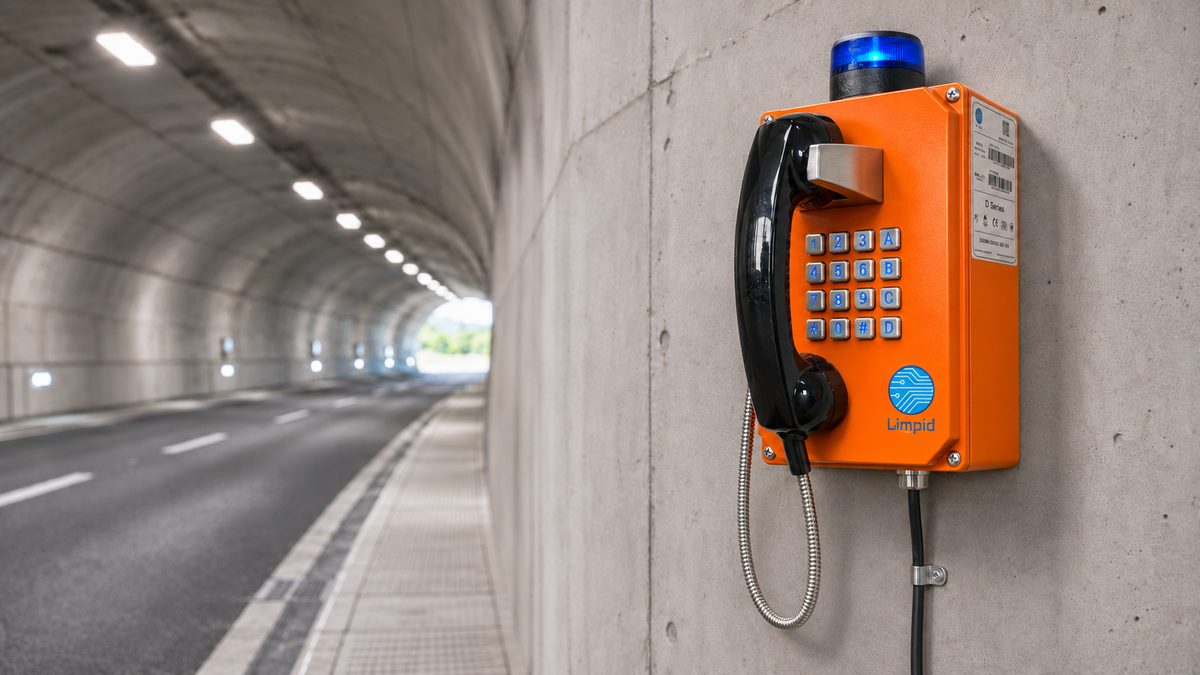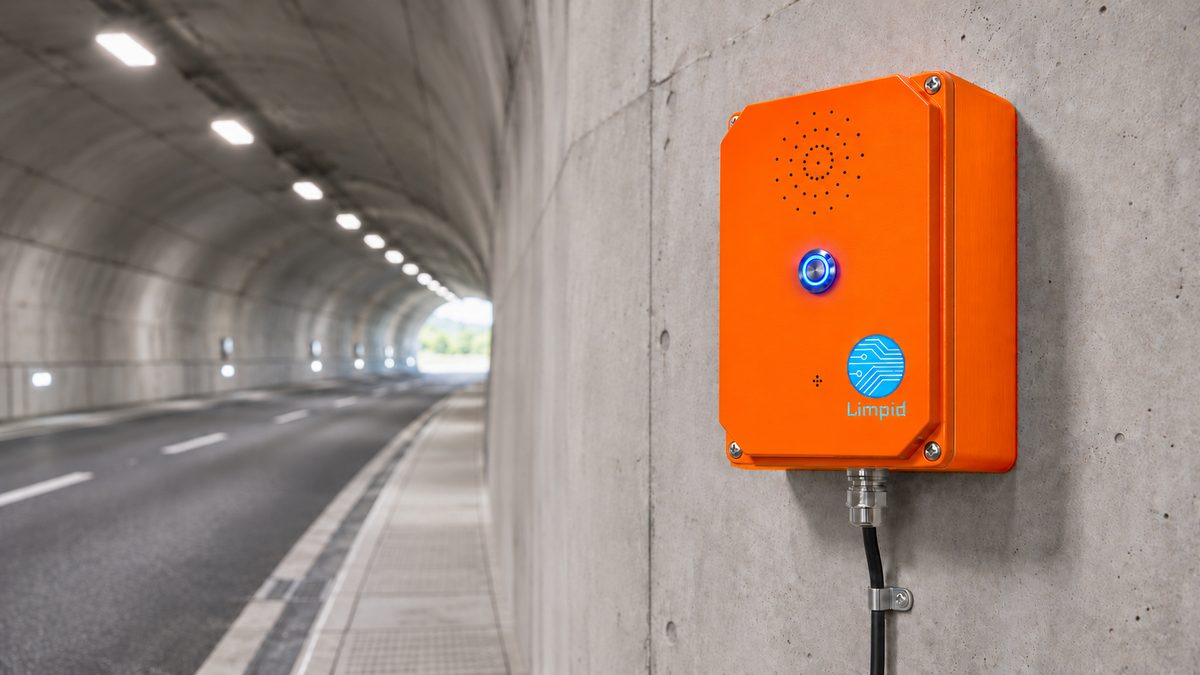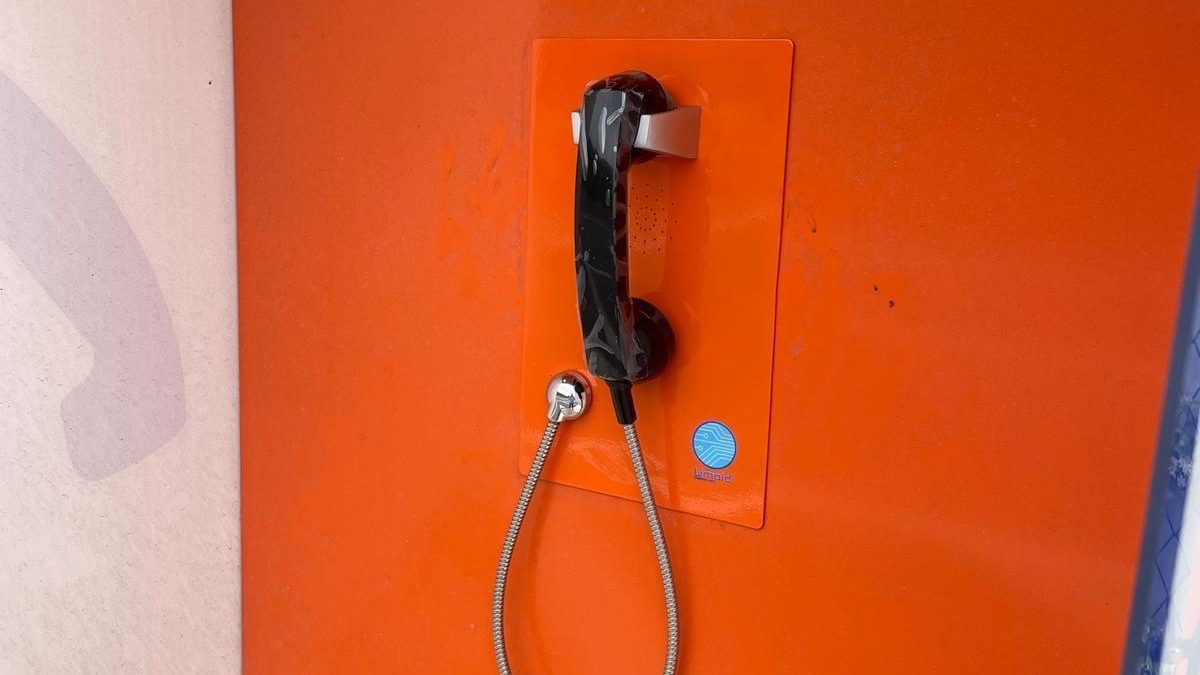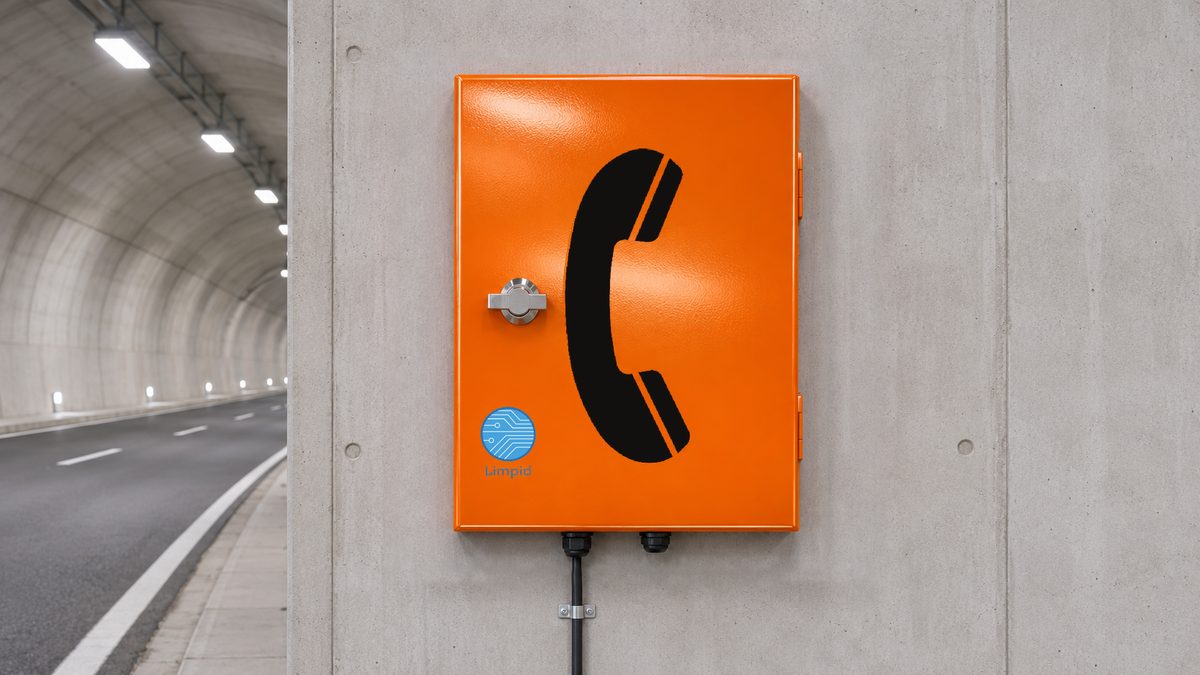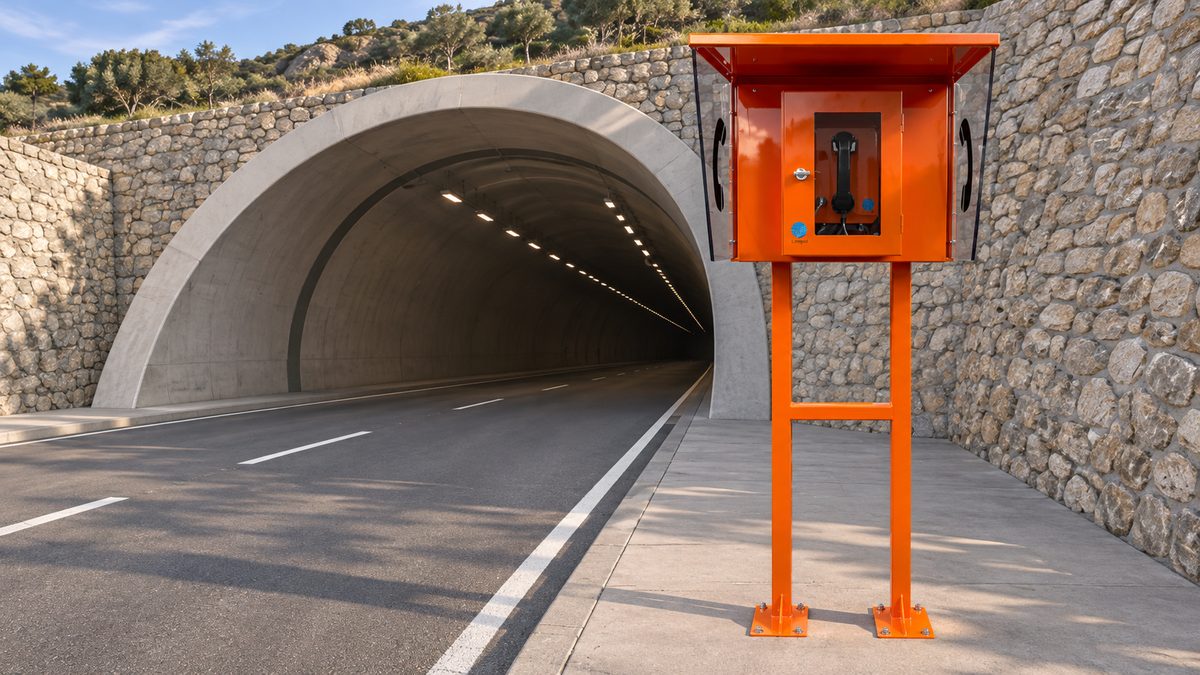
In current road tunnel specifications, emergency telephones are placed inside the tunnel and at the portals roughly every 150 metres. Tunnels with emergency niches call for a push-button telephone; where there is no niche, a handset telephone with a cover is required. The telephone is expected to be IP-based, rated at least IP66 and powered over PoE.
Spacing: 150 metres
Specifications call for emergency communication points inside the tunnel and at the portals roughly every 150 metres. Emergency niches are placed in the right-hand wall in the direction of traffic. The European Union tunnel safety directive (2004/54/EC) also sets a maximum spacing for emergency stations of 150 metres in new tunnels and 250 metres in existing ones.
In a 1.5-kilometre tunnel, that means about 10 emergency communication points in each tube, plus the portals.
With or without a niche: which telephone?
The type of telephone depends on whether the tunnel has emergency niches and whether the telephone is inside or outside the tunnel:
| Location | Required telephone | Limpid product |
|---|---|---|
| Emergency niche | Push-button SOS telephone (some specifications also accept a handset) | DS Series, S Series B inside a cabinet |
| No niche, tunnel wall | Handset telephone with a cover | D Series inside the closed LMD-12 enclosure |
| Outside the tunnel, portal | Telephone with a cover, on a column or base | Inside an LMD-01 or LMD-03 shelter, in an LMD-12 enclosure |
| In the niche, for maintenance staff | Service telephone with keypad | D Series D-K (with keypad) |
Technical requirements for the telephone
The main points specifications set for the emergency telephone are:
- IP-based: the telephone connects to the network and can obtain its IP address via DHCP.
- IP rating: at least IP66.
- Power: PoE (IEEE 802.3af).
- Audio: built-in Class D amplifier, full-duplex speech, HD audio (7 kHz).
- Handset: electromagnetic hookswitch and armored cord.
- Environment: operation from −20 °C to +50 °C inside the tunnel, up to 95% relative humidity.
How Limpid emergency telephones meet these requirements
| Requirement | Limpid |
|---|---|
| IP-based | All Limpid emergency telephones run on an IP (SIP) line and can obtain an IP address via DHCP. |
| At least IP66 | The D, DS and S Series are IP66. The IP54 S-109 and S-111 are used inside the IP66 LMD-12 enclosure. |
| PoE 802.3af | All emergency telephones are powered over PoE (802.3af / 802.3at) or by a 9–24 V DC adapter. |
| Class D amplifier | Built-in Class D amplifier in every emergency telephone; ringer up to 96 dB. |
| Full-duplex, HD audio | Full-duplex speech with echo cancellation (AEC); G.722 wideband audio, 7–16 kHz audio bandwidth. |
| Electromagnetic hookswitch, armored cord | Electromagnetic hookswitch on the D Series and S-109; steel-armored cord on handset models. |
| −20 °C to +50 °C, 95% humidity | Operating temperature −25 °C to +65 °C, relative humidity up to 95%. |
Control room and maintenance
A call from the telephone reaches the operator in the tunnel control room, who can see which point it comes from. Specifications also require the image from the camera covering that point to appear on screen with the call, and an alert to reach the control room when the niche door is opened.
Emergency telephones are tested regularly: every month the handset is lifted to confirm the call reaches the control room, and every year the telephone is called from the control room to confirm two-way speech. The auto-answer function of Limpid emergency telephones makes this remote test easier.
This note summarizes the main points of current specifications; on every project, that project's own specification and approved design take precedence.