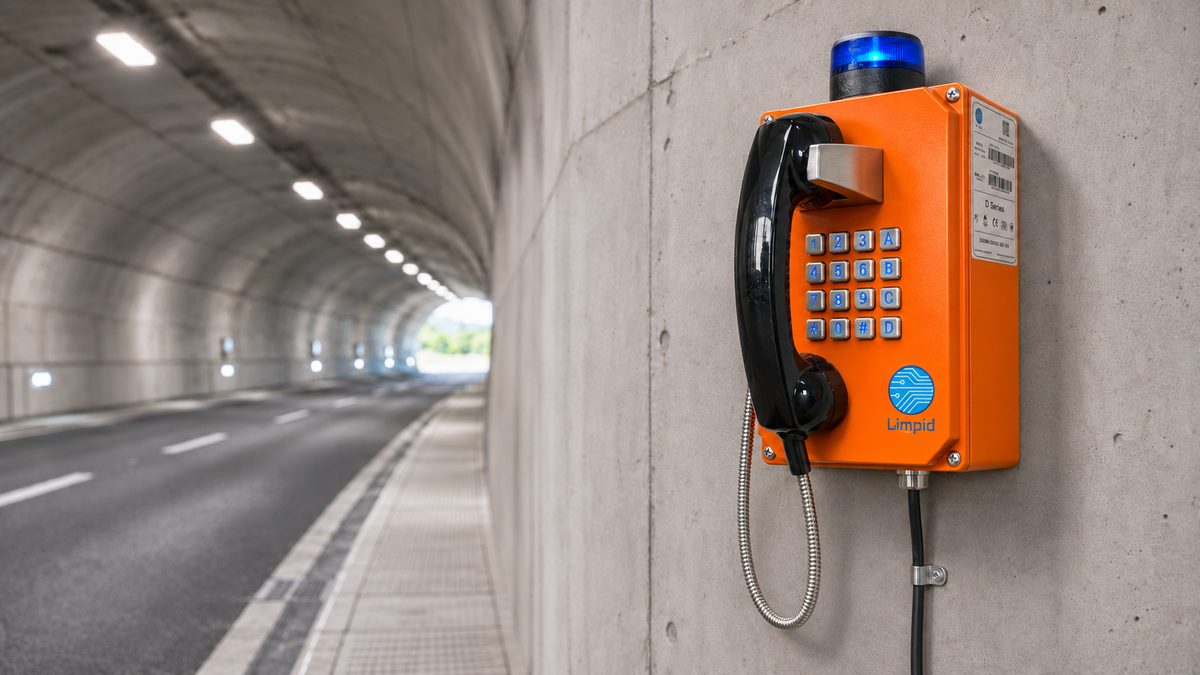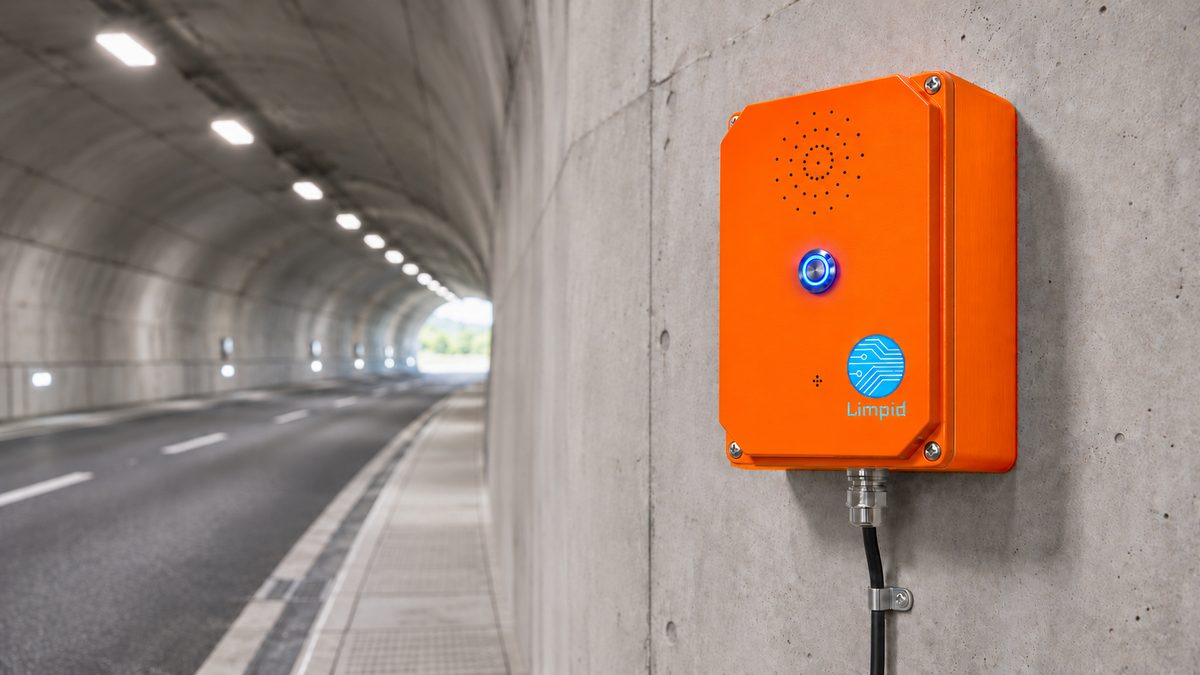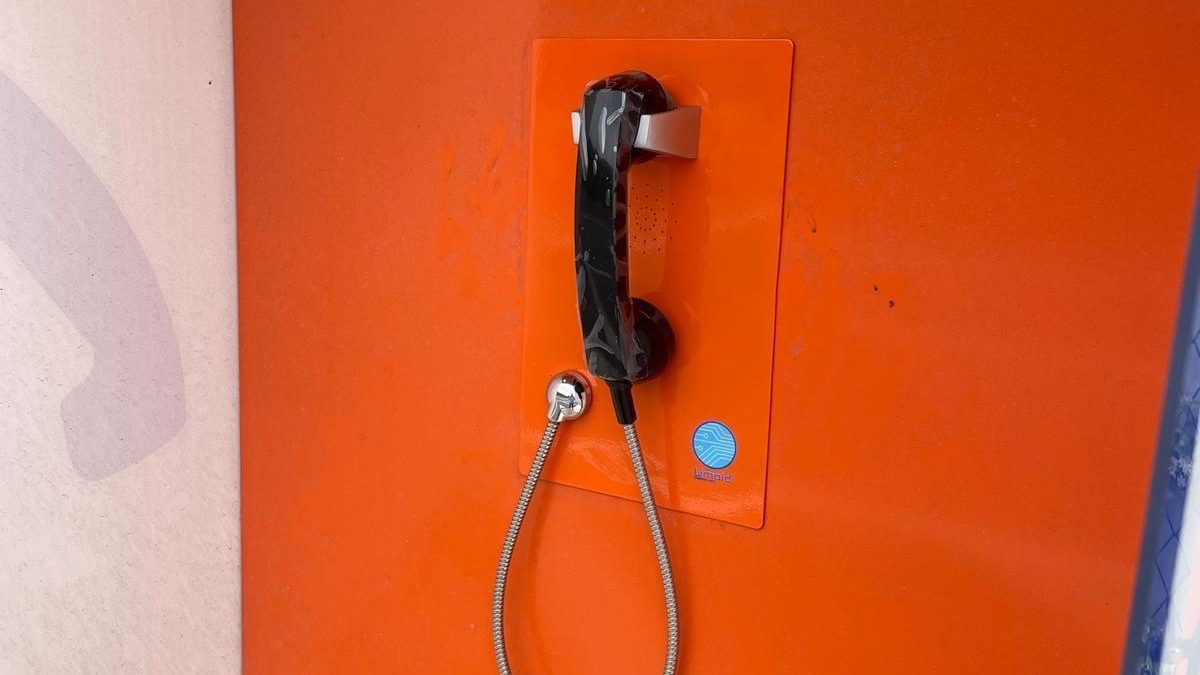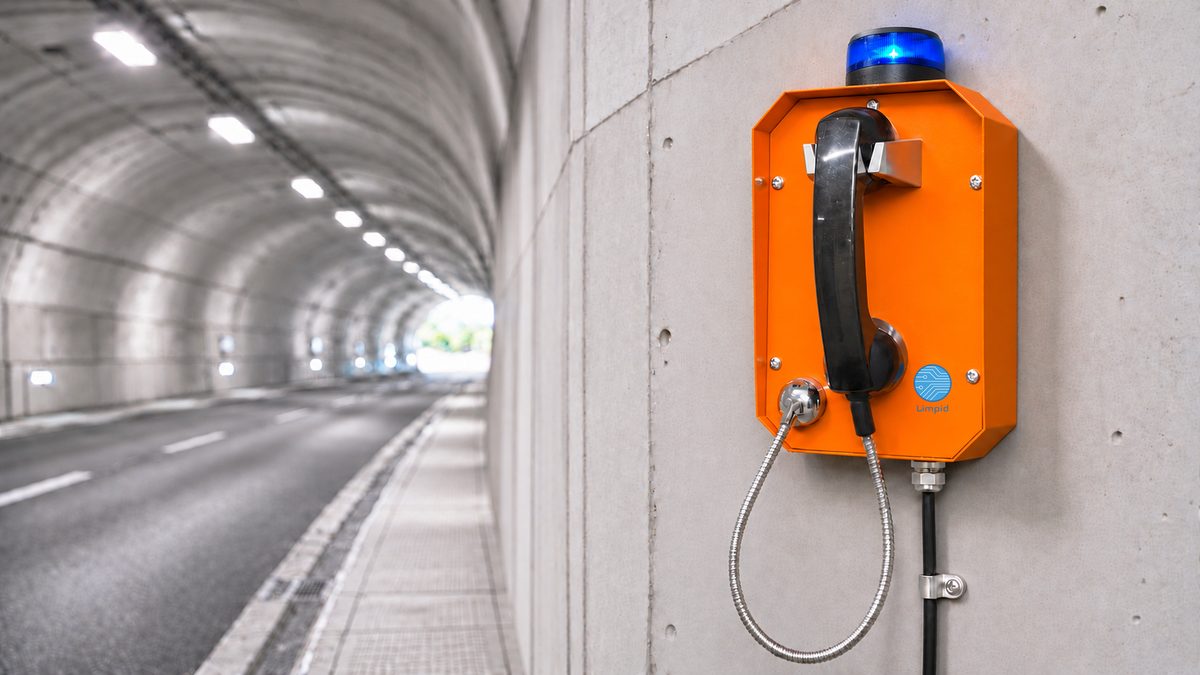
An IP code shows how well a device is protected against dust and solid objects (first digit) and water (second digit); it is defined in IEC 60529. IP54 is dust-protected and resists splashing water; IP66 is dust-tight and withstands powerful water jets; IP67 is dust-tight and withstands temporary immersion up to 1 metre. In dusty, damp places such as tunnels and outdoor sites, IP66 is the usual choice for an emergency telephone.
How to read an IP code
An IP (Ingress Protection) code has two digits. The first digit (0–6) shows protection against dust and solid objects, the second digit (0–9) protection against water; the higher the digit, the higher the protection. The codes and their tests are defined in IEC 60529, adopted in Europe as EN 60529. These are the digits you meet most often on emergency telephones:
| Digit | Meaning |
|---|---|
| First digit 5 | Dust-protected: dust is not fully excluded, but cannot enter in a quantity that interferes with operation. |
| First digit 6 | Dust-tight: no ingress of dust. |
| Second digit 4 | Protected against splashing water from any direction. |
| Second digit 5 | Protected against water jets from any direction (6.3 mm nozzle). |
| Second digit 6 | Protected against powerful water jets (12.5 mm nozzle). |
| Second digit 7 | Protected against temporary immersion (up to 1 m for 30 minutes). |
So IP54 means dust-protected and resistant to splashing water, IP66 dust-tight and resistant to powerful water jets, and IP67 dust-tight and resistant to temporary immersion.
Is IP67 better than IP66?
Not always. The immersion test (7) and the water-jet test (6) are separate tests; a product marked only IP67 is not considered jet-tested. Products that pass both are dual-marked IP66/IP67.
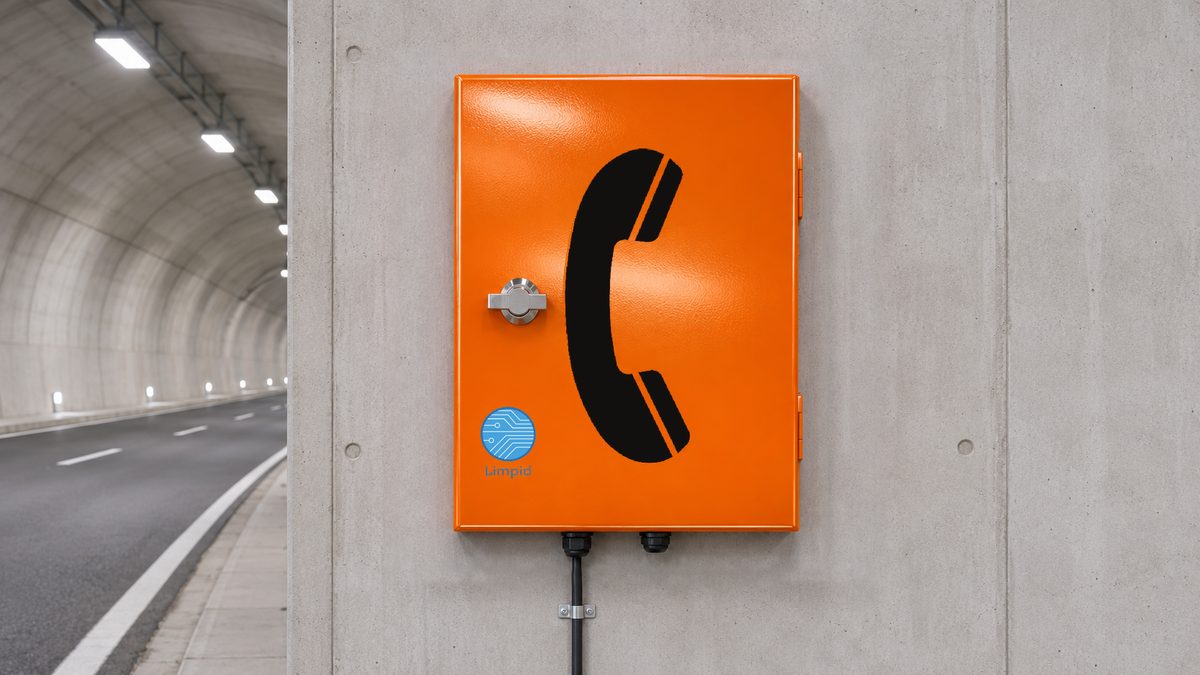
A wall-mounted emergency telephone is never submerged, but it can be exposed to rain, wind-driven water and water jets during cleaning. That is why IP66 is the more meaningful rating for the enclosure. At Limpid, IP67 is used at button level: the stainless steel button of the DS Series is IP67, while the enclosure provides IP66 once installed.
The rating applies to the installed unit
Datasheets give the IP rating “once fully installed”. Cable entries must be sealed with cable glands and the unit installed according to the instructions; an open cable entry leaves even an IP66 telephone unprotected.
IP ratings of Limpid products
| Product | Enclosure | Rating | Use |
|---|---|---|---|
| D Series | Aluminum alloy | IP66 | Indoor and outdoor, tunnels |
| DS Series | Aluminum | IP66 · button IP67 | Narrow recesses, inside cabinets, in an enclosure |
| S Series | Stainless steel | IP66 | Flush-mounted in cabinets and enclosures |
| S-109 | 1.20 mm sheet metal | IP54 | Indoors; outdoors inside a shelter |
| S-111 | 1.20 mm sheet metal, hooded | IP54 | Wall, surface-mounted |
| LMD-12 enclosure | 1.50 mm sheet metal | IP66 · TSE certified | All Limpid telephones |
An IP54 telephone can be used in dusty, damp places when it is installed inside an IP66 enclosure. On the Narlıdere Metro Line, for example, S-111 telephones operate inside LMD-12 enclosures.
Which rating for which environment?
- Inside tunnels: dusty, damp and dirty. Choose an IP66 telephone (D, DS) or an IP66 enclosure (LMD-12).
- Tunnel portals and open sites: the telephone is exposed to direct rain. Use it inside a shelter: LMD-01, LMD-03 or, in noisy places, the acoustic LMD-02.
- Cabinet solutions: the IP66 S Series is flush-mounted in the same cabinet as the fire extinguishers and panel (LMD-04, LMD-05).
- Dry indoor areas: the IP54 S-109 may be enough; the ALT Series is designed for indoor areas such as hospitals and shopping centers.
The final decision rests with the project specification: the IP rating and certificates it requires take precedence.